
Catbal: our biggest
illustration brief yet.
A collection of 1,776 pawtraits, an elaborate world behind them, and a four-week deadline to tackle thousands of hand-drawn assets.
drawn by hand.
Bold outlines. Glossy surfaces.
Characters with a story behind them.
- Collection
- 1,776 pawtraits
- Discipline
- Illustration
- Team
- 11 people / Sketch, render, layering
- Brief window
- Four weeks
We came in late, and the brief was massive.
Catbal brought us in at the last minute because they needed more creative manpower.
The scope called for more than 3,000 unique traits and 7,000 unique layers. There were also one-of-one artworks and additional deliverables to cover, all within a four-week window.
Illustration was our main business at the time, but we hadn’t taken on anything this big before. The collection also had a very particular style, with detailed rendering and a whole world of lore behind the characters.
This was before AI was part of our production process. The sketches and finished artwork had to come from artists.
Production scope is separate from the collection’s 1,776 pawtraits.
There was an entire school of Catbal to understand.
The collection followed cats through five tiers, from vaguely sensing that something was wrong with reality to occupying the highest, supposedly nonexistent circles of power.
Each tier had its own place in the story and its own allocation of pawtraits. That gave the artwork a specific context: we were helping produce characters who belonged to different parts of an established world, with a visual identity that needed to hold together across the collection.
Lost and Found
Cats beginning to sense something strange around them. Possibly Cathulhu. Possibly a bozo making noises.
The Appawrentices
New students taking their first steps through the School of Catbal.
Illumeownatus
The Academy’s finest, keeping the light of gnosis alive.
Manus Catbali
A supposedly nonexistent circle at the highest levels of power.
Magistri Maximi Catbalorum
Living legends embodying different ways of completing the path.
We built an eleven-person production team.
We reached into our creative network and brought in more artists to help with the workload. Then we split production into clear responsibilities: four artists sketched the traits, six rendered the sketches into finished artwork, and one project manager handled the layering and kept everything in place.
This gave the work a defined route through the team. Sketches could move into rendering, while the project manager handled how the finished components fitted together.
Bringing additional artists into such a specific style was part of the challenge. The bold outlines, glossy surfaces and detailed accessories had to feel consistent as the work passed between people.
Artists defining the traits.
Ideas and silhouettes take shape as sketches.
Artists bringing the finish.
Linework, surfaces, accessories and shading.
Project manager keeping it together.
Layering and the organisation of finished components.
The characters had rules underneath the artwork.
The collection’s specification defined ten attributes, in a set layer order. Fur and face were marked as unswappable. The other eight attributes were swappable.
Each component needed to sit correctly within the assembled character, with the right elements appearing in front of or behind one another.
With 7,000 unique layers in scope, this needed someone’s dedicated attention. Our project manager handled that part of the work while the artists focused on sketching and rendering.
- 01BackgroundSwappable
- 02CompanionSwappable
- 03FurFixed
- 04FaceFixed
- 05HeadwearSwappable
- 06ClothesSwappable
- 07NeckSwappable
- 08OffhandSwappable
- 09HairSwappable
- 10CollectibleSwappable
Layer order from the collection specification.
The detail still had to survive the scale.
The finished artwork shows the level of care involved: hard highlights across the faces, layered accessories, small hanging chains and softer shading through the clothing.
Those details took time. They also help explain why six people were dedicated to rendering. Alongside the trait production, the brief included one-of-one artwork and other creative deliverables within the same schedule.
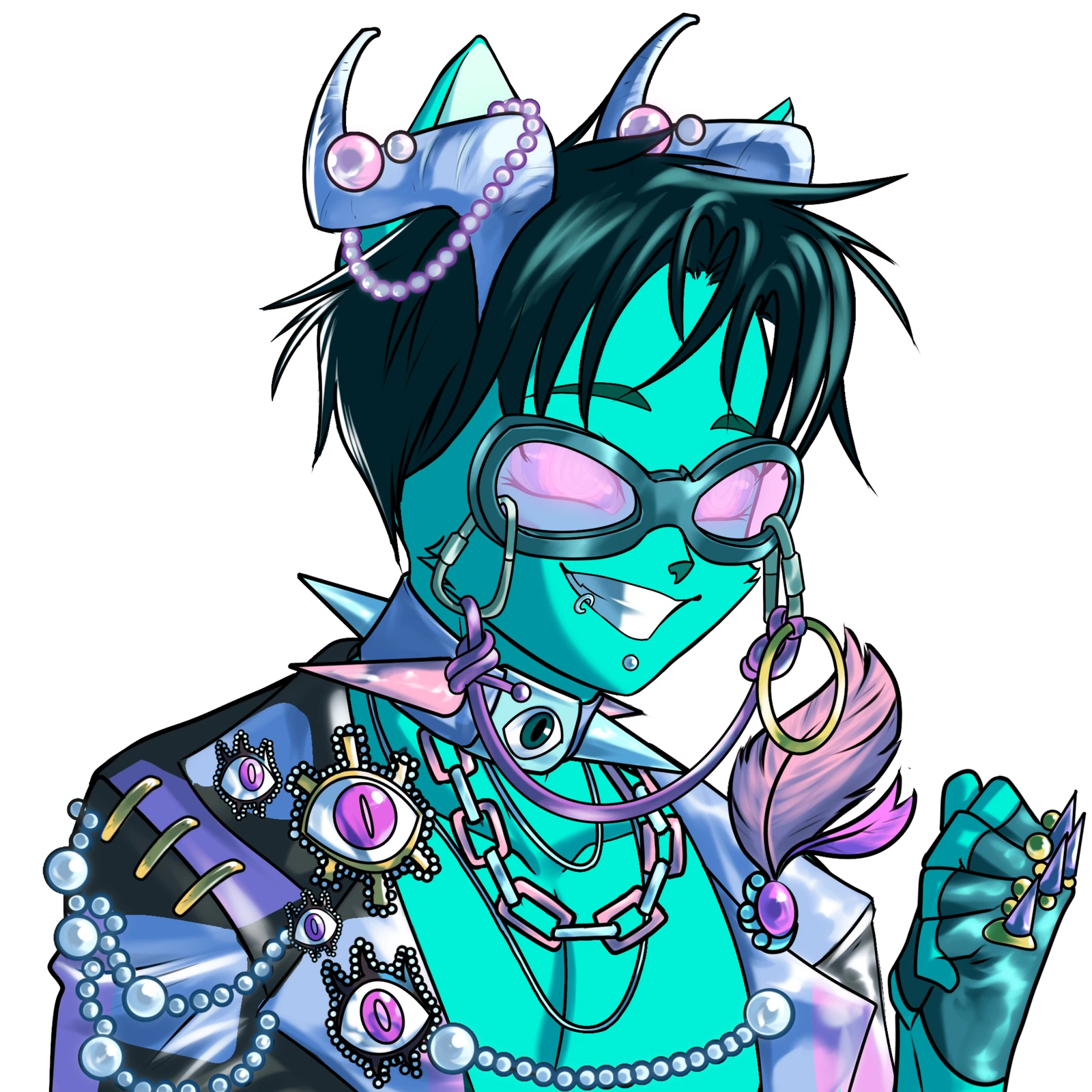 01 / Highlights & linework02 / Metalwork & accessories
Many characters. One visual language.
Across the selected artwork, the personalities change while the visual language stays connected: bold outlines, distinctive silhouettes, carefully rendered surfaces and accessories that help tell each character’s story.